![[Logo as used in Home Page and Elsewhere]](https://champlainpark.org/wp-content/uploads/2020/10/cropped-champlain-park-logo-emily-2020.08.06.jpg?w=104)

Join the celebration
Pollinator Appreciation Day
Saturday, June 20th, 2026, from 10 a.m. to 2 p.m.
at the Fletcher Wildlife Garden. Ottawa
Hosted by Wild Pollinator Partners
Free tickets at EventBrite.ca
Wild Pollinator Partners is all about appreciating pollinators. We love how they make sure we have fruit and vegetables to eat and beautiful flowers in our gardens.
This year’s theme is “Start with a Native Tree” which features how important planting native trees are to our environment and how planting a single key native tree can be a game-changer for increasing pollinator biodiversity.
A variety of experts representing organizations or themselves will be on hand to share information and answer questions including:
![[Background is a big tree, a distant forest and blue sky with clouds, foregound is someone watering a newly planted small tree]](https://champlainpark.org/wp-content/uploads/2026/02/2026-pollinator-appreciation-day-start-with-a-native-tree.jpg)
- Wild Pollinator Partners
- Master Gardeners of Ottawa
- Ontario Invasive Plant Council
- Ottawa Wildflower Seed Library
- Ecology Ottawa
- City of Ottawa
- Friends of the Earth
- Monarch Teacher Network
- Ottawa Stewardship Council
- National Capital Commission
- CAFES Ottawa
- Come and enter our contest to win a free tree to provide habitat and food for pollinators.
- Come see an interactive display that maps tree planting, pollinator gardening and greening initiatives in the city by ward and neighbourhoods.
- Find out how to start a pollinator plant project at your local school or park. Recognize invasive species to keep these problem plants out of your yard.
- The Ottawa Wildflower Seed Library will be there giving away native plant seeds and providing information on how to grow them.
- Find out how Ottawa is promoting Right-of-Way (ROW) gardening, learn about the “Plant a Tree” program and what is going on with the Community Gardening and Greening Initiative program.
- Bird Friendly Ottawa members will take you on a tour of the FWG to show you how birds contribute to the distribution of some of our native plants and trees. They’ll also explain how to keep your yard safe for birds.
Enjoy these activities and more. Find out why everyone wants to help pollinators and grow trees.
Full URL for EventBrite tickets: https://www.eventbrite.ca/e/ottawa-pollinator-appreciation-day-tickets-1976357525561
![[Christmas Trees Recycled around the Rink, January 2024]](https://champlainpark.org/wp-content/uploads/2024/12/20240120_120005_as_4419-christmas-trees-recycled-around-the-rink.jpeg)
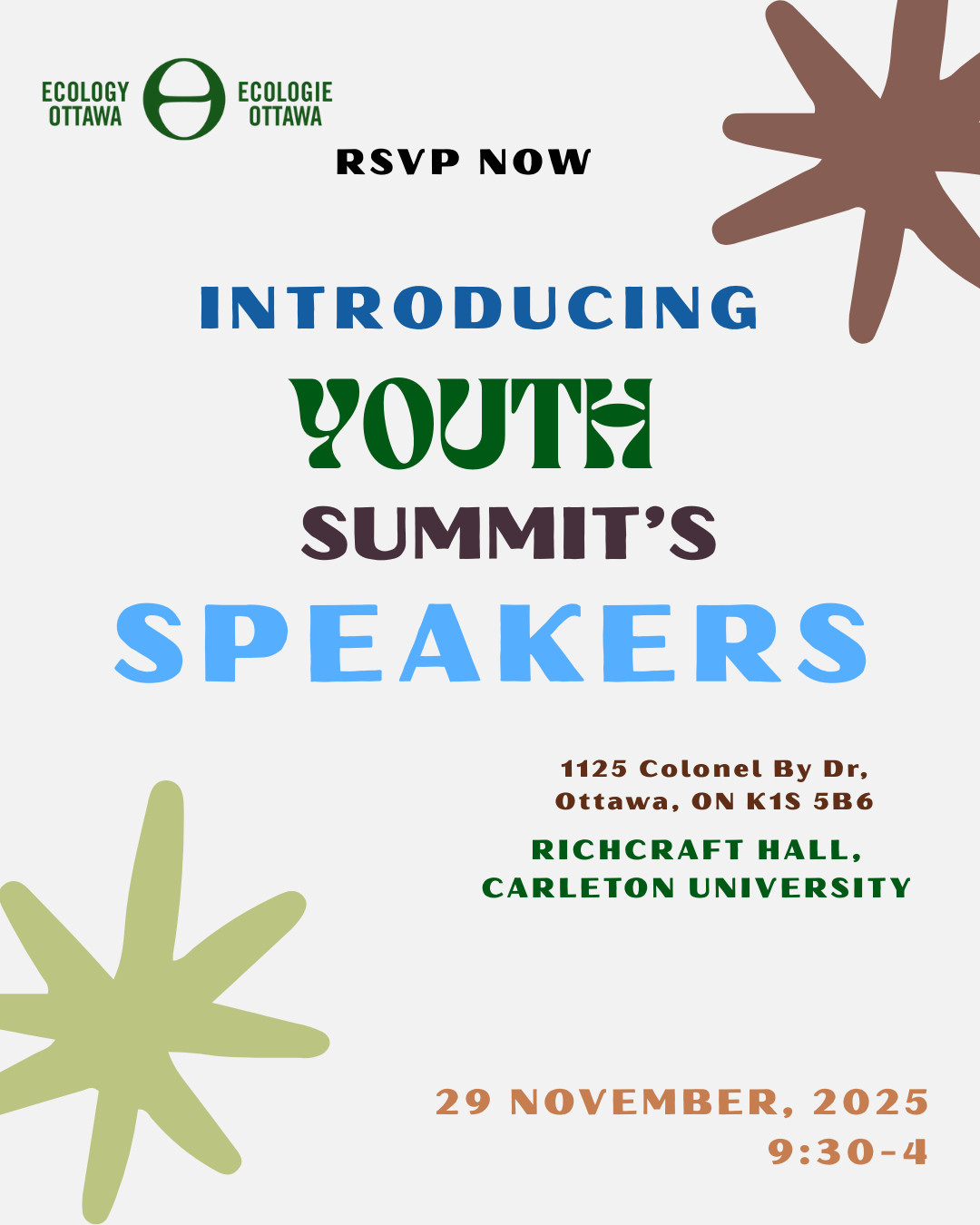
![[Poster for the tree planting event]](https://champlainpark.org/wp-content/uploads/2025/10/20251018-cafes-community-tree-planting.jpeg)
![[Figure 1. Giant swallowtail adult (Photo J.T. Arnason)]](https://champlainpark.org/wp-content/uploads/2025/07/new-species-2025-figure-1.jpg)
![[Figure 2. Hoptree with flowers. (Photo J.T. Arnason)]](https://champlainpark.org/wp-content/uploads/2025/07/new-species-2025-figure-2.jpg)
![[Figure 3. Giant swallowtail larvae (Photo C. Shearer)]](https://champlainpark.org/wp-content/uploads/2025/07/new-species-2025-figure-3.jpg)
![[Figure 4. Other insect pollinators. Clockwise from top left: monarch, honeybee, great black wasp, red admiral butterfly, black swallowtail larva, tiger swallowtail butterfly. (Photos J.T. Arnason and C. Shearer)]](https://champlainpark.org/wp-content/uploads/2025/07/new-species-2025-figure-4.jpg)
![[Bird picture]](https://champlainpark.org/wp-content/uploads/2025/05/20250502-naturehood-bird.jpeg)
![[Facebook post by the Kichi Sibi Winter Trail people on recycling Chrismas trees - 20241230]](https://champlainpark.org/wp-content/uploads/2024/12/kswt-christmas-tree-post-20241231.png)
 Champlain Park Community